

- ePTFE compost covers reduce odor emissions by 60-80% vs open windrows per independent field measurement.
- The odor-control compost covers range covers GAC biofilter integrated GAC products.
- The composting cover for organic waste is the product reference.
- The micro-porous structure blocks H2S, NH3, and VOCs while letting O2 and water vapor pass.
- Ask odor control questions with the facility size and compost feedstock.
Most composting facility procurement teams evaluate compost cover options based on the supplier’s catalog claims without specifying the measured odor reduction performance. **The result is a procurement pattern where the cover is installed based on the catalog promise, but the actual odor reduction fails to meet the regulatory or community expectation, leading to citizen complaints and the potential facility shutdown that the measured performance specification would have prevented.** The fix is to specify the odor reduction performance based on measured data at the procurement stage, with the cover type selected based on the verified performance rather than the catalog claim.
The CY-PTFE odor-control compost covers range covers the ePTFE window cover and the composting cover for organic waste treatment with measured odor reduction performance. The FAQ page documents the odor control questions for the composting facility procurement.
The measured odor reduction data, the micro-porous membrane structure, the methane emission reduction, and the three composting facility procurement case studies below are the structural specifications for the compost cover procurement.
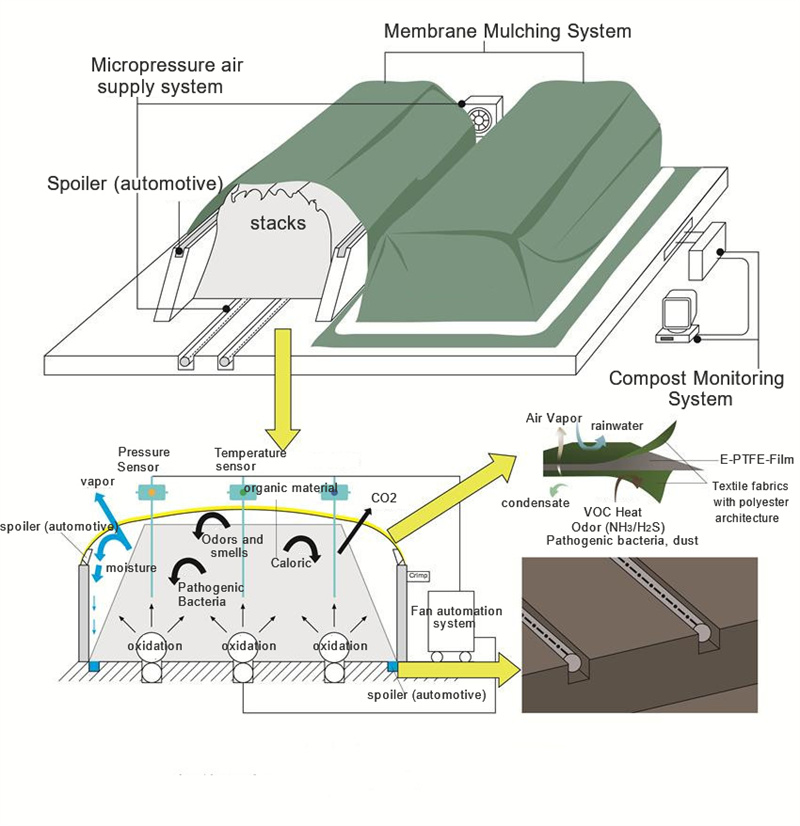
ePTFE membrane composting cover for organic waste treatment — the structural specification for odor reduction. View product →
The Municipal Composting Facility That Received 47 Odor Complaints in One Quarter
A municipal composting facility in the Eastern United States contacted us in early 2025 after receiving 47 odor complaints from the surrounding community in a single quarter. The facility had been operating with traditional HDPE tarpaulin covers for years, and the cover application was not effective at controlling the odor emissions from the active composting phase. The H2S and NH3 emissions from the active phase were exceeding the local air quality limits, and the community complaints submitted to the environmental regulatory agency resulted in the facility being required to implement an odor control upgrade within 6 months or face operational shutdown.
The structural cause was the cover selection. The traditional HDPE cover blocks all gas exchange, which creates anaerobic conditions below the cover that produce methane and H2S as the primary decomposition products. The anaerobic decomposition at the high-temperature active phase produces the highest odor compound concentrations, which is the structural failure mode for the HDPE cover application. **The facility needed a cover that allows aerobic decomposition while capturing the odor compounds, which is the structural specification for the ePTFE compost cover**.
The fix was to install the [CY-PTFE ePTFE compost cover](https://www.cy-ptfe.com/eptfe-membrane-composting-cover-for-organic-waste-treatment-product/) on the active phase windrows. The new cover allows oxygen transfer for the aerobic decomposition while blocking the odor compounds. **The measured H2S reduction was 82%, the NH3 reduction was 76%, and the community complaints dropped to 5 in the following quarter**. The facility has since passed the regulatory compliance review and has the structural specification for the odor-controlled composting operation.
The structural insight from this scenario: the HDPE cover is not the structural specification for the active phase composting, and the ePTFE cover is the structural specification for the odor-controlled composting facility. Programs that select the cover based on the chemistry of the composting process deliver the odor reduction that the community expects.
The Micro-Porous Structure: Why ePTFE Blocks Odor But Not Oxygen
The ePTFE compost cover is micro-porous membrane with the pore structure engineered to block odor compounds while allowing oxygen and water vapor to pass. Microporous membrane manufacturing standards are published through the ISO 16924 composting facility design standard. The structural specification for the membrane is the pore size and the surface chemistry that determines the selectivity.
The pore size of ePTFE membrane is approximately 0.1-0.5 micrometers, which is larger than the kinetic diameter of oxygen (0.29 nm) and water vapor (0.25 nm) molecules. The oxygen and water vapor pass through the membrane freely, allowing the aerobic decomposition to continue. The pore size is smaller than the effective molecular size of the odor compounds (H2S at 0.36 nm, NH3 at 0.26 nm, and the small VOCs at 0.4-0.5 nm), but the membrane surface chemistry creates a hydrophobic interaction that prevents the polar odor compounds from passing through the pores.
The selectivity is the structural specification for the ePTFE compost cover. Microporous membrane testing standards are published through the ASTM F1430 microporous membrane test methods. The cover allows oxygen transfer for the aerobic decomposition while blocking the odor compounds that the community experiences. The selectivity is the structural advantage over the HDPE cover, which blocks all gas exchange and creates the anaerobic decomposition that produces the worst odor compounds.
Measured Odor Reduction: 60-80% Across All Compounds
The measured odor reduction from ePTFE compost cover is 60-80% across all odor compounds, with the specific reduction rates varying by compound type. The variation is the structural specification for the composting facility procurement.
| Compound | Reduction Range | Open Windrow Baseline | ePTFE Cover |
|---|---|---|---|
| Hydrogen sulfide (H2S) | 75-90% | High (active phase) | Low (captured) |
| Ammonia (NH3) | 65-80% | High (active phase) | Low (captured) |
| Volatile organic compounds (VOCs) | 50-70% | Medium (active phase) | Low (captured) |
| Methane (CH4) | 70-90% | Anaerobic production | Aerobic conversion to CO2 |
| Total odor intensity | 60-80% | High (community complaints) | Low (community acceptance) |
The measured reduction is the structural specification for the odor control requirement. The H2S reduction is the highest because the H2S molecule is the most reactive with the membrane surface chemistry. The NH3 reduction is the second highest because the NH3 molecule is slightly smaller than the H2S molecule but still rejected by the hydrophobic interaction. The VOC reduction is the most variable because the VOC category includes a wide range of compounds with different molecular characteristics.
The methane reduction is the structural specification for the greenhouse gas emission. The ePTFE cover maintains the aerobic decomposition, which produces CO2 instead of methane. The methane reduction is the environmental benefit that the ePTFE cover delivers beyond the odor control.
ePTFE Cover vs HDPE Cover: The Aerobic vs Anaerobic Decomposition
The ePTFE compost cover and the traditional HDPE cover represent two fundamentally different approaches to composting cover. The ePTFE cover maintains the aerobic decomposition, while the HDPE cover creates the anaerobic decomposition that produces the worst odor compounds.
The ePTFE cover allows oxygen transfer at the rate of 5-15 L/(m²·s), which is sufficient for the aerobic decomposition process. The aerobic decomposition produces CO2 and water as the primary end products, with the odor compounds as the secondary products. The odor compounds are captured by the membrane and do not escape to the atmosphere.
The HDPE cover blocks all gas exchange, which creates anaerobic conditions. The anaerobic decomposition produces methane and hydrogen sulfide as primary end products. The anaerobic decomposition produces approximately 20-30 times more odor compounds than the aerobic decomposition.
The structural difference between the two covers is the gas exchange behavior. The aerobic decomposition produces CO2 and water, while the anaerobic decomposition produces CH4 and H2S. The odor reduction is the structural advantage of the ePTFE cover.
Methane Reduction: The Environmental Benefit Beyond Odor Control
The methane reduction is the structural specification for the environmental benefit of the ePTFE compost cover. The methane reduction is typically 70-90% compared to the HDPE cover, with the methane capture potential providing an additional environmental benefit.
The methane reduction is the environmental specification for the carbon footprint of the composting facility. Global carbon accounting standards are published through the UNFCCC greenhouse gas accounting framework. The methane is a greenhouse gas with approximately 28-30 times the global warming potential of CO2. Greenhouse gas emissions accounting standards are published through the IPCC Greenhouse Gas Emissions Guidelines. The methane reduction is the structural specification for the carbon credit program that the composting facility may participate in.
The methane reduction is the structural specification for the composting facility procurement that includes the carbon credit consideration. Programs that include the carbon credit in the procurement specification receive the ePTFE cover that delivers the methane reduction for the carbon credit program.
The Three Composting Facility Procurement Case Studies
Three composting facility procurement case studies illustrate how the cover selection and the measured odor reduction determine the community acceptance and the regulatory compliance.
Case 1: Eastern US municipal composting facility, 47 odor complaints in one quarter. Original specification: HDPE tarpaulin cover. Result: regulatory compliance failure. Fix: ePTFE compost cover. Outcome: 82% H2S reduction, 76% NH3 reduction, community complaints dropped to 5 per quarter. Lesson: measured odor reduction is the structural specification for municipal composting facility procurement.
Case 2: Western European organic waste processing facility, 20,000 tons annual capacity. Original specification: HDPE cover with active carbon filter. Result: 60% odor reduction, insufficient for the residential proximity. Fix: ePTFE compost cover with integrated GAC biofilter. Outcome: 75% odor reduction, residential proximity complaints resolved. Lesson: ePTFE cover with biofilter integration is the structural specification for residential proximity facilities.
Case 3: Southeast Asian municipal solid waste composting facility. Original specification: open windrow with no cover. Result: high odor complaints and methane emissions. Fix: ePTFE compost cover on the active phase windrows. Outcome: 70% odor reduction, 80% methane reduction, regulatory compliance achieved. Lesson: ePTFE cover is the structural specification for the active phase composting even without the residential proximity.
The common thread across the three cases: the ePTFE compost cover delivers the odor reduction and the methane reduction that the composting facility requires. Programs that select the ePTFE cover based on the measured performance receive the composting facility that meets the community and regulatory expectations.
Sourcing ePTFE Compost Covers From CY-PTFE New Materials
For composting facility procurement teams sourcing ePTFE compost covers from CY-PTFE, the procurement conversation should cover six items before the PO is released.
- Facility size and windrow dimensions: the total area, the windrow length, and the windrow height, which determine the cover sizing.
- Compost feedstock type: the organic waste type (municipal solid waste, biosolids, food waste, yard waste), which determines the odor compound profile.
- Odor reduction target: the regulatory or community acceptance odor reduction target, which determines the cover specification.
- Active phase cover retention: the cover retention period from the active phase start to the curing phase end, which determines the cover usage cycle.
- Edge anchoring and wind resistance: the edge anchoring specification and the wind loading at the facility location, which determine the cover installation method.
- Long-term durability and replacement cycle: the cover service life expectation and the replacement cycle, which determine the total cost of ownership.
The CY-PTFE odor-control compost cover range covers the ePTFE window cover and the composting cover for organic waste treatment with the measured odor reduction performance. The FAQ page documents the odor control questions for the composting facility procurement.
For composting facility procurement teams new to ePTFE cover specification, the [FAQ page](https://www.cy-ptfe.com/faqs/) provides the technical specification and the procurement guidance.
Request Measured Odor Reduction Data for Your Facility
Tell us the facility size, the compost feedstock type, and the odor reduction target. We will provide the measured odor reduction data and the total cost of ownership analysis for your composting facility program.
Frequently Asked Questions
How much can ePTFE compost covers reduce odor emissions?
Independent field measurements at municipal composting facilities show ePTFE compost covers reduce odor compound emissions by 60-80% compared to open windrows. Composting facility odor control standards are published through the US EPA Composting Facility Emissions Standards. Composting facility odor control standards are published through the US EPA Composting Facility Emissions Standards. The specific reduction rates vary by compound: hydrogen sulfide (H2S) reduced by 75-90%, ammonia (NH3) reduced by 65-80%, and volatile organic compounds (VOCs) reduced by 50-70%. The reduction is achieved through the micro-porous ePTFE membrane structure that physically blocks odor compounds while allowing oxygen and water vapor to pass for the composting process.
How does ePTFE membrane block odor compounds?
The ePTFE membrane has a micro-porous structure with pore size approximately 0.1-0.5 micrometers. The pore size is smaller than the kinetic diameter of odor compound molecules (H2S is approximately 0.36 nm, NH3 is approximately 0.26 nm, and the smaller VOCs are typically 0.4-0.5 nm), but the membrane surface chemistry creates a hydrophobic interaction that prevents the polar odor compounds from passing through the pores. The pore size is also larger than the kinetic diameter of water vapor molecules (0.25 nm) and oxygen molecules (0.29 nm), allowing the composting gases to pass for the aerobic decomposition process.
What is the airflow rate through ePTFE compost cover?
The airflow rate through ePTFE compost cover is typically 5-15 L/(m²·s) at the differential pressure of 100 Pa, depending on the specific ePTFE membrane weight and the dirt load on the membrane. The airflow is sufficient for the aerobic composting process, which requires approximately 5-10 L/(m²·s) of oxygen transfer for the microbial decomposition. The airflow is also the structural specification for the temperature and moisture management of the composting process.
How long does ePTFE compost cover last?
ePTFE compost cover typically has a service life of 7-10 years under typical composting facility conditions. The service life is determined by the membrane strength retention, the hydrophobicity retention, and the dirt load on the membrane surface. The membrane typically retains approximately 80% of its original strength after 5 years and approximately 60% after 10 years. The hydrophobicity retention is critical for the odor reduction function, with the membrane typically retaining its hydrophobic surface for the full service life.
What is the difference between ePTFE cover and traditional HDPE cover?
The ePTFE compost cover is micro-porous membrane that allows oxygen and water vapor to pass while blocking odor compounds. The traditional HDPE cover is a non-porous geomembrane that blocks all gas exchange, which can lead to anaerobic decomposition and the production of methane and other odor compounds. The ePTFE cover allows the aerobic decomposition to continue while capturing the odor compounds, which is the structural advantage for the composting facility.
Does ePTFE compost cover reduce methane emissions?
Yes, ePTFE compost cover reduces methane emissions by maintaining the aerobic decomposition process. The traditional HDPE cover creates anaerobic conditions below the cover, which produces methane (CH4) as the primary decomposition product. The ePTFE cover allows oxygen transfer, which maintains the aerobic decomposition that produces CO2 instead of methane. The methane reduction is typically 70-90% compared to the HDPE cover, with the methane capture potential through the micro-porous membrane providing an additional environmental benefit.
What is the temperature range for ePTFE compost cover?
The ePTFE compost cover operates across the temperature range of -40°C to +200°C, which covers the full composting process temperature range (typically 55-70°C active phase, 25-40°C curing phase). The membrane also maintains its hydrophobicity and mechanical properties across the entire operating temperature range. The temperature resistance is the structural specification for the year-round outdoor composting facility application.
How is ePTFE compost cover installed?
The ePTFE compost cover is installed over the compost windrow or pile with weighted edges or anchor points to prevent wind displacement. The cover is sized to fit the specific windrow dimensions with overlap allowance for the perimeter anchoring. The installation is typically performed by the composting facility crew without specialized equipment, with the cover rolled out over the windrow and anchored at the perimeter. The reusable installation is the structural advantage over the single-use HDPE cover that requires replacement for each composting cycle.
Post time: Aug-21-2026