

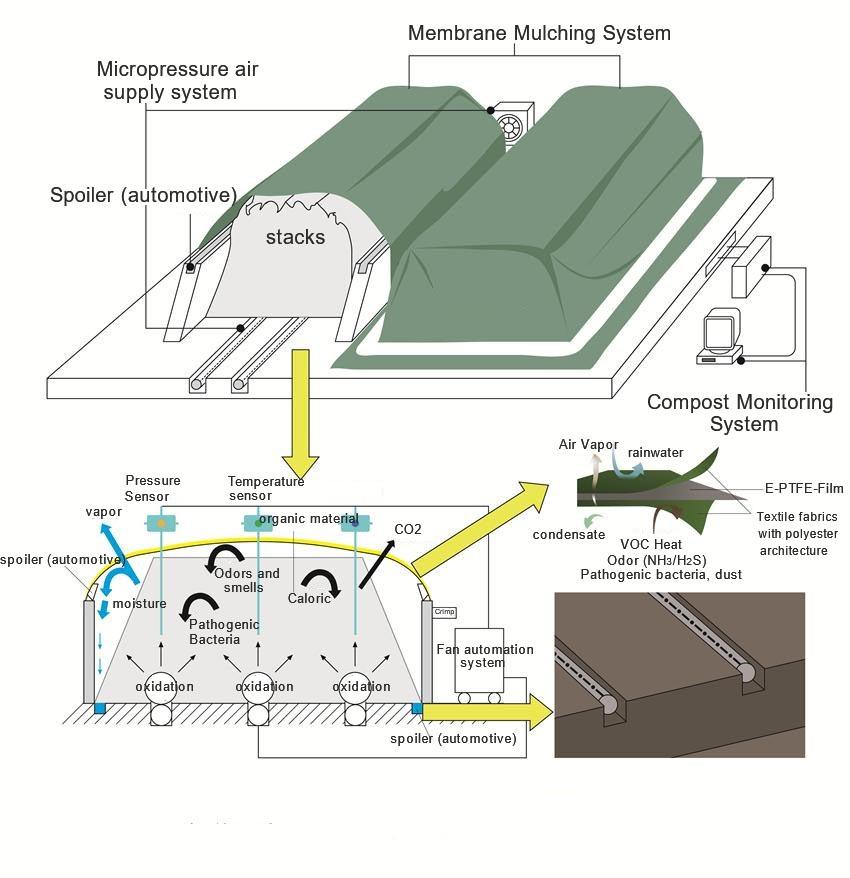
ePTFE Windrow Covers play a crucial role in improving waste management. They effectively tackle challenges like odor control, moisture retention, and decomposition efficiency. By creating a stable environment for organic waste, these covers ensure optimal conditions for fermentation and breakdown, leading to a more sustainable waste management process.
Key Takeaways
- ePTFE Windrow Covers significantly improve odor control in composting by reducing harmful gas emissions, creating a better working environment.
- These covers enhance moisture retention, ensuring organic materials stay hydrated, which is crucial for effective composting.
- By promoting microbial activity, ePTFE Windrow Covers accelerate the decomposition process, leading to quicker turnaround times for organic waste.
Overview of ePTFE Windrow Cover

Definition of ePTFE
Expanded polytetrafluoroethylene (ePTFE) represents a significant advancement in polymer technology. This fully fluorinated polymer exhibits unique properties that make it ideal for various applications, including waste management. The ePTFE Windrow Cover utilizes this innovative material to create an effective barrier against environmental factors, ensuring optimal conditions for organic waste fermentation.
Properties of ePTFE
The ePTFE Windrow Cover boasts several remarkable properties that enhance its functionality in waste management. Below is a summary of its key characteristics:
| Property | Description |
|---|---|
| Chemical Composition | Fully fluorinated polymer (ePTFE) |
| Excellent Chemical Resistance | Resistant to caustic chemicals |
| Temperature Stability | Service temperature range: -240° to +250°C |
| Flexibility | Soft and flexible material |
| Permeability | Porous and permeable to air, watertight under low pressure |
| Low Coefficient of Friction | Ideal for applications requiring lubricity and durability |
Additionally, ePTFE features a microporous structure created by mechanically stretching PTFE. This structure allows for water vapor permeability while blocking liquid water, making it highly effective in maintaining moisture levels in composting operations. Its flexibility and temperature resistance further enhance its durability, ensuring that the ePTFE Windrow Cover can withstand various environmental conditions.
The combination of these properties makes the ePTFE Windrow Cover an essential tool for optimizing waste management practices, promoting sustainability, and improving overall efficiency in organic waste decomposition.
Key Issues in Waste Management
Odor Control Challenges
Odor control remains a significant challenge in organic waste management. Various factors contribute to unpleasant smells, which can affect both operational efficiency and community relations. Key issues include:
- Anaerobic Conditions: Managing anaerobic conditions is crucial to prevent odor issues. When organic materials decompose without sufficient oxygen, they produce foul-smelling gases.
- Composition of Organic Materials: The types of incoming organic materials significantly affect odor generation. Ingredients stored anaerobically often lead to stronger odors.
- Aeration Strategies: Effective aeration and odor neutralization strategies are necessary to mitigate odors. Without proper airflow, odors can intensify, creating an unpleasant environment.
Odors often originate from incoming ingredients that may have been stored improperly. Low oxygen levels in the composting system lead to various odor problems, including the release of reduced sulfur compounds and ammonia. The decomposition of organic material by bacteria under both aerobic and anaerobic conditions naturally produces unpleasant odors. Gases such as methane and volatile organic compounds are significant contributors to odors in waste management facilities.
Moisture Loss Issues
Moisture loss presents another critical issue in waste management, particularly in open windrow systems. Maintaining optimal moisture levels is essential for effective composting. Key points include:
- Impact on Composting Process: High relative air humidity can slow down the composting process. Studies show that degradation rates and germination indices in windrow composting are significantly lower under high humidity conditions.
- Recommended Practices: Trough composting is often recommended in areas with high relative humidity due to its superior performance in retaining moisture.
Inadequate moisture can hinder microbial activity, which is vital for decomposition. The efficiency of composting relies heavily on maintaining the right moisture content to support microbial life.
Inefficient Decomposition
Inefficient decomposition is a common problem in traditional windrow composting. Several factors contribute to this issue:
- Oxygen Levels: Inadequate oxygen levels can slow down the composting process and lead to odors. Oxygen levels below 16% can significantly hinder decomposition.
- Moisture Content: Proper moisture content is crucial for optimal microbial activity. Insufficient moisture can slow down the process, while excessive moisture can lead to anaerobic conditions.
- Carbon to Nitrogen Ratios: An unbalanced carbon to nitrogen ratio can hinder microbial activity. A balanced ratio is essential for effective composting.
- Aeration Frequency: Insufficient aeration can create anaerobic conditions, slowing down the process. Regular agitation of the compost pile helps introduce oxygen and moisture, enhancing decomposition.
The average time required for organic waste decomposition in conventional windrow systems ranges from 6 to 12 weeks. Agitating the pile 1 to 3 times per week can significantly enhance the composting process by ensuring adequate oxygen and moisture levels.
The ePTFE Windrow Cover addresses these key issues effectively. By creating a stable environment for organic waste, it enhances odor control, moisture retention, and decomposition efficiency, making it an invaluable tool in modern waste management practices.
Solutions Provided by ePTFE Windrow Cover
Enhanced Odor Control
The ePTFE Windrow Cover significantly enhances odor control in composting operations. This innovative cover acts as a breathable barrier that allows for controlled aeration. By minimizing the release of volatile organic compounds (VOCs) and ammonia, which are major contributors to unpleasant odors, the cover effectively reduces odor emissions. Testing has shown that ePTFE windrow covers can achieve over an 80% reduction in odor emissions compared to uncovered or traditionally covered windrows. This remarkable capability not only improves the working environment for composting operators but also fosters better community relations by mitigating odor issues.
Improved Moisture Retention
Moisture retention is critical for successful composting, and the ePTFE Windrow Cover excels in this area. The cover prevents moisture loss during the composting process, ensuring that organic materials remain adequately hydrated. It helps regulate temperature, which is crucial for maintaining optimal moisture levels. Additionally, the ePTFE Windrow Cover discourages pests, contributing to a healthier composting environment. By maintaining consistent moisture levels, the cover supports the decomposition process and enhances overall compost quality.
- Key benefits of improved moisture retention include:
- Prevention of moisture loss during composting.
- Regulation of temperature to maintain optimal moisture levels.
- Reduction of pest activity, promoting a healthier composting environment.
Boosted Microbial Activity
Microbial activity is essential for effective composting, and the ePTFE Windrow Cover plays a vital role in supporting this process. Moisture is crucial as it aids in transporting nutrients and substances within the compost pile, thereby enhancing microbial activity. The hydrophobic nature and microporosity of the ePTFE fabric facilitate gas exchange while preventing water droplet penetration. This allows moisture vapor to pass through the membrane, which is essential for maintaining microbial activity by regulating moisture levels.
Covering windrows with ePTFE helps protect the microbial population, which is vital for maintaining temperature and moisture levels necessary for effective composting. By creating an optimal environment for microbes, the ePTFE Windrow Cover accelerates the decomposition process, leading to quicker turnaround times for organic waste.
Case Studies and Real-World Applications of ePTFE Windrow Cover
Successful Implementations
Numerous facilities have successfully adopted the ePTFE Windrow Cover, showcasing its effectiveness in waste management. For instance, a large agricultural operation in California implemented the cover to manage its organic waste. The facility reported significant improvements in composting efficiency and odor control. Another example includes a municipal composting site in Texas, where the ePTFE Windrow Cover helped maintain optimal moisture levels, even during periods of extreme heat.
Outcomes and Benefits
The benefits of using ePTFE Windrow Covers extend beyond operational efficiency. Facilities have observed several environmental advantages, including:
- Enhanced biodegradation, which facilitates the decomposition of organic waste.
- Reduced waste accumulation, contributing to more efficient waste management.
- Minimal secondary pollution, ensuring that the use of ePTFE covers does not harm the environment.
Moreover, improvements in compost quality have been reported after adopting the ePTFE Windrow Cover. The following table summarizes these enhancements:
| Improvement Type | Description |
|---|---|
| Enhanced Breathability | Facilitates the discharge of water vapor and carbon dioxide, maintaining optimal moisture levels. |
| Temperature Insulation | Serves as a thermal barrier, boosting microbial activity and accelerating decomposition. |
| Bacteria Containment | Prevents harmful bacteria intrusion, promoting a healthy fermentation process. |
| Weather Independence | Creates a self-contained environment, ensuring consistent composting results regardless of weather. |
These outcomes illustrate the transformative impact of the ePTFE Windrow Cover on waste management practices, making it an invaluable tool for both agricultural and municipal applications.
ePTFE Windrow Covers provide innovative solutions for waste management. They effectively tackle challenges related to odor control, moisture retention, and decomposition efficiency. As facilities adopt these covers, they can expect improved operational outcomes and environmental benefits. Further exploration of ePTFE Windrow Covers will reveal even more advantages for sustainable waste management practices.
FAQ
What are ePTFE Windrow Covers made of?
ePTFE Windrow Covers consist of expanded polytetrafluoroethylene, a durable and flexible polymer designed for optimal waste management.
How do ePTFE Windrow Covers improve composting efficiency?
These covers enhance composting efficiency by regulating moisture, controlling odors, and promoting microbial activity, leading to faster decomposition.
Can ePTFE Windrow Covers withstand extreme weather conditions?
Yes, ePTFE Windrow Covers are engineered to endure extreme temperatures and adverse weather, ensuring consistent composting results year-round.
Post time: Oct-05-2025